Dong Y Hoa Sen Traditional Medicine Clinic in Ho Chi Minh City introduces Vietnamese traditional care for people seeking help with muscle and joint pain, stiffness and nerve-related symptoms. Services include acupuncture, traditional acupressure, herbal medicine, cupping and assessment for traditional bloodletting (chích lể). Choosing a method begins with understanding the problem, your medical history and your goals.
Whether you live in Saigon or are visiting Vietnam, contact Hoa Sen before your appointment to discuss your symptoms, the appropriate branch and language support.
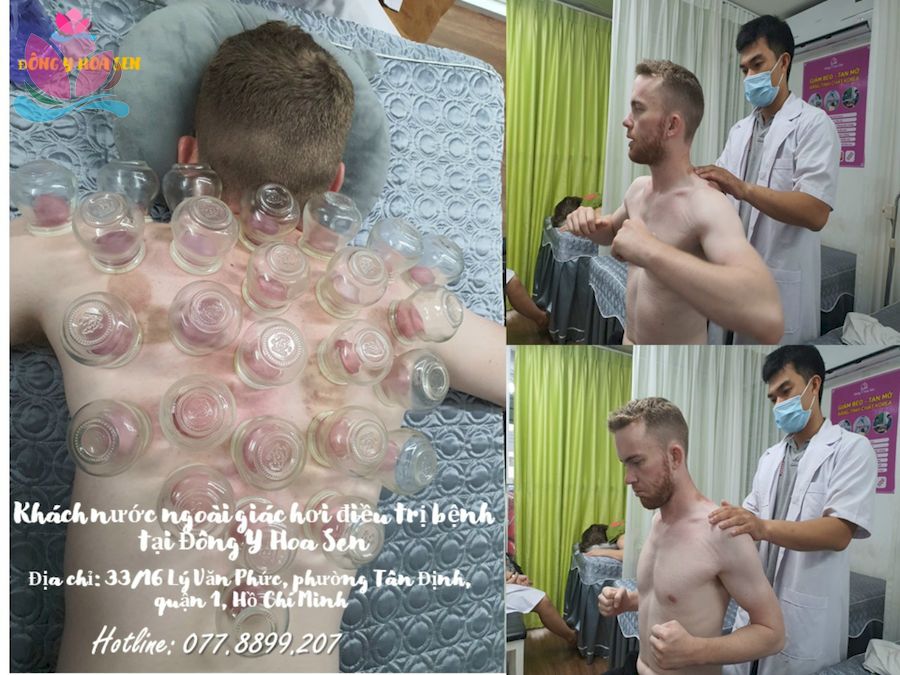
International visitor receiving cupping and shoulder care at Hoa Sen, as identified in the clinic’s published photo. This image documents a visit; it does not demonstrate a treatment outcome.
Traditional medicine with an individual treatment plan
Hoa Sen was founded by Trần Thị Thuý. The clinical team assesses health concerns and advises on appropriate treatment. A consultation is an opportunity to explain where pain occurs, how long it has lasted, what makes it worse and how it affects walking, work or sleep.
Bring previous diagnoses, scans and prescriptions. Agree on practical goals, such as easier movement or improved daily function, and review progress with the clinician. Treatment choices and the number of visits vary; no single technique is suitable for every patient.
Five traditional treatment methods at Hoa Sen
1. Acupuncture (châm cứu)
Acupuncture uses fine needles at selected points. Research suggests it may help some people with back or neck pain, knee osteoarthritis pain and certain headaches. Benefits vary by condition and individual. It does not reverse every underlying cause of pain or replace necessary medical care.
Safe treatment requires a trained practitioner and sterile, single-use needles. Tell the clinician about pregnancy, blood-thinning medication and relevant health conditions before treatment.

Acupuncture at Dong Y Hoa Sen. The treatment plan should follow a clinical assessment.
2. Traditional acupressure (xoa bóp bấm huyệt)
Traditional acupressure combines manual pressure with massage techniques. A session can focus on areas such as the neck, shoulders, back or limbs, depending on the assessment. The aim may include easing muscle tension and making movement more comfortable.
Pressure should be adjusted to your comfort and health status. Report sharp pain, unusual tingling or worsening symptoms. Forceful manipulation is not an automatic part of care, particularly where injury or nerve compression is suspected.

Manual therapy at Hoa Sen, with the approach adapted to the person being treated.
3. Herbal medicine (thảo dược)
Herbal medicine is considered through a consultation, rather than a universal prescription for everyone with the same symptom. Ask about the ingredients, intended purpose, dosage, duration and follow-up of any recommended formula.
Herbs can cause side effects and interact with medicines. Share your full medication and supplement list, allergies, pregnancy status, and any liver or kidney conditions. Do not stop prescribed medicines without discussing this with the prescribing clinician.
4. Cupping therapy (giác hơi)
Cupping creates suction on the skin using cups. Some people seek it for muscle discomfort, but research supporting pain relief remains limited and generally low quality. Temporary circular marks can occur; burns, skin injury and infection are possible. Marks are not proof that “toxins” have been removed.
Ask whether cupping is appropriate for your skin condition and medical history, and what aftercare is needed. The international visitor photo above shows cupping and shoulder care previously documented by Hoa Sen.
5. Traditional bloodletting (chích lể)
Chích lể is a traditional skin-pricking or bloodletting technique, sometimes combined with cupping. It is invasive and should only be considered after clinical assessment, explanation of risks and informed consent. Ask the clinic whether it is appropriate and available for your particular case.
It is not a routine treatment for every muscle, joint or neurological complaint. Bleeding, infection and scarring are concerns; blood-thinning medicines, bleeding disorders or anaemia require particular attention. Do not attempt this procedure yourself. There is no established basis for promising that it cures nerve compression, stroke or chronic joint disease.
Common muscle, joint and nerve-related concerns
The following are reasons to seek an assessment and discuss care options. They are not a list of conditions that all five methods can treat or cure.
Musculoskeletal conditions
- Neck and shoulder pain: stiffness, muscle tension and discomfort associated with prolonged sitting or repetitive tasks.
- Low back pain: recurring or persistent pain that affects work, movement or daily activities.
- Knee osteoarthritis and other joint pain: discuss symptom management alongside appropriate exercise and medical care.
- Cervical or lumbar degenerative changes and disc-related symptoms: assessment helps determine whether specialist review is needed.
- Shoulder stiffness, tendon problems and muscle strain: treatment depends on the diagnosis and stage of recovery.
Neurological and nerve-related conditions
- Sciatica: pain travelling into the leg, sometimes with tingling or numbness.
- Numbness or tingling in the hands and feet: symptoms may have several causes and need evaluation.
- Tension-type headache or migraine: discuss a diagnosis and an appropriate prevention and treatment plan.
- Facial weakness and post-stroke rehabilitation needs: medical assessment and coordinated rehabilitation take priority; complementary care must not delay standard treatment.
Seek urgent medical care for sudden facial drooping, arm weakness or speech difficulty, or new loss of bladder or bowel control with back pain. Do not wait for a traditional therapy appointment.
Planning a visit as an international patient
- Contact the clinic: describe your main concern and preferred appointment date.
- Confirm arrangements: ask about language support, clinician availability, consultation fees and treatment costs.
- Bring your records: include current medicines, relevant scans and a short medical history, ideally with a translation if needed.
- Discuss the plan: ask about expected benefits, alternatives, risks and follow-up, especially if your stay in Vietnam is short.
Hoa Sen Clinic locations in Ho Chi Minh City
The familiar District 1 and District 2 area names below are included to help visitors plan their journey:
- District 1 area: 33/16 Lý Văn Phức, Tân Định, Ho Chi Minh City, Vietnam.
- District 2 area: 95/6 Lương Định Của, An Khánh, Ho Chi Minh City, Vietnam.
Appointments: +84 77 8899 207 · Contact Hoa Sen on Zalo. Confirm the location and opening hours before travelling.
Frequently asked questions
Can international visitors book an appointment?
International visitors can contact Hoa Sen to discuss an appointment. Confirm language assistance and availability before arriving; do not assume that an interpreter is included.
Which treatment is best for back pain or sciatica?
The right approach depends on the cause, examination findings and your health history. Acupuncture or manual therapy may be discussed as part of a wider plan; not every case is suitable for cupping, herbs or bloodletting.
How many sessions will I need?
There is no fixed number for everyone. Ask for an initial plan, estimated costs and a review point. Persistent or worsening symptoms should prompt reassessment.
Where can I read more about the clinic?
See our Vietnamese clinic guide and founder profile.
Sources and further reading
- NCCIH: Acupuncture — effectiveness and safety
- NCCIH: Cupping
- NCCIH: Traditional Chinese medicine — evidence and safety
- Hoa Sen’s original publication identifying the international visitor photograph
This clinic guide provides general information and does not replace an individual medical assessment. Outcomes vary.